Station House Awards · buyer guide
Presentation axe motifs versus complete display pieces
For worldwide Station House Awards orders, distinguish an axe motif from a complete decorative display before approving the gift. A silhouette on a plaque and a dimensional presentation object have different component and handling questions. State what the quote should supply, what the owner provides and how the recipient will display the finished piece.
Reviewed 2026-09-05 · AI-assisted editorial review. General buying guidance; illustrative scenarios are not customer case studies. Images are AI-generated concepts.
The phrase presentation axe can describe very different objects. One design may use an engraved axe silhouette, another may attach a decorative axe-shaped element, and another may be intended to display a separately supplied object. Ask which interpretation the organizer wants and label it in the first design brief. A motif does not establish that a complete axe or display assembly is included. Keep the decorative image, any physical element and the supporting plaque on separate scope lines until the proposal confirms the finished construction. This simple distinction prevents a concept from becoming an accidental equipment order or a promise about an object that nobody has measured or agreed to supply.
How do you separate tribute symbolism from equipment specifications?
For a recognition gift, describe the intended decorative and display purpose clearly for this recipient. Do not infer that an axe-shaped element is functional equipment, or that a physical object shown in a reference is suitable for a particular use.
If the project involves an actual supplied axe or another unusual object, ask the responsible organizer and appropriate specialist to review the specific handling and display proposal. This article does not prescribe a mounting method or assess equipment suitability. The buyer can make progress by documenting the exact object, its owner and the intended setting. A clear description allows the relevant professionals to address the real construction instead of responding to an ambiguous product nickname.

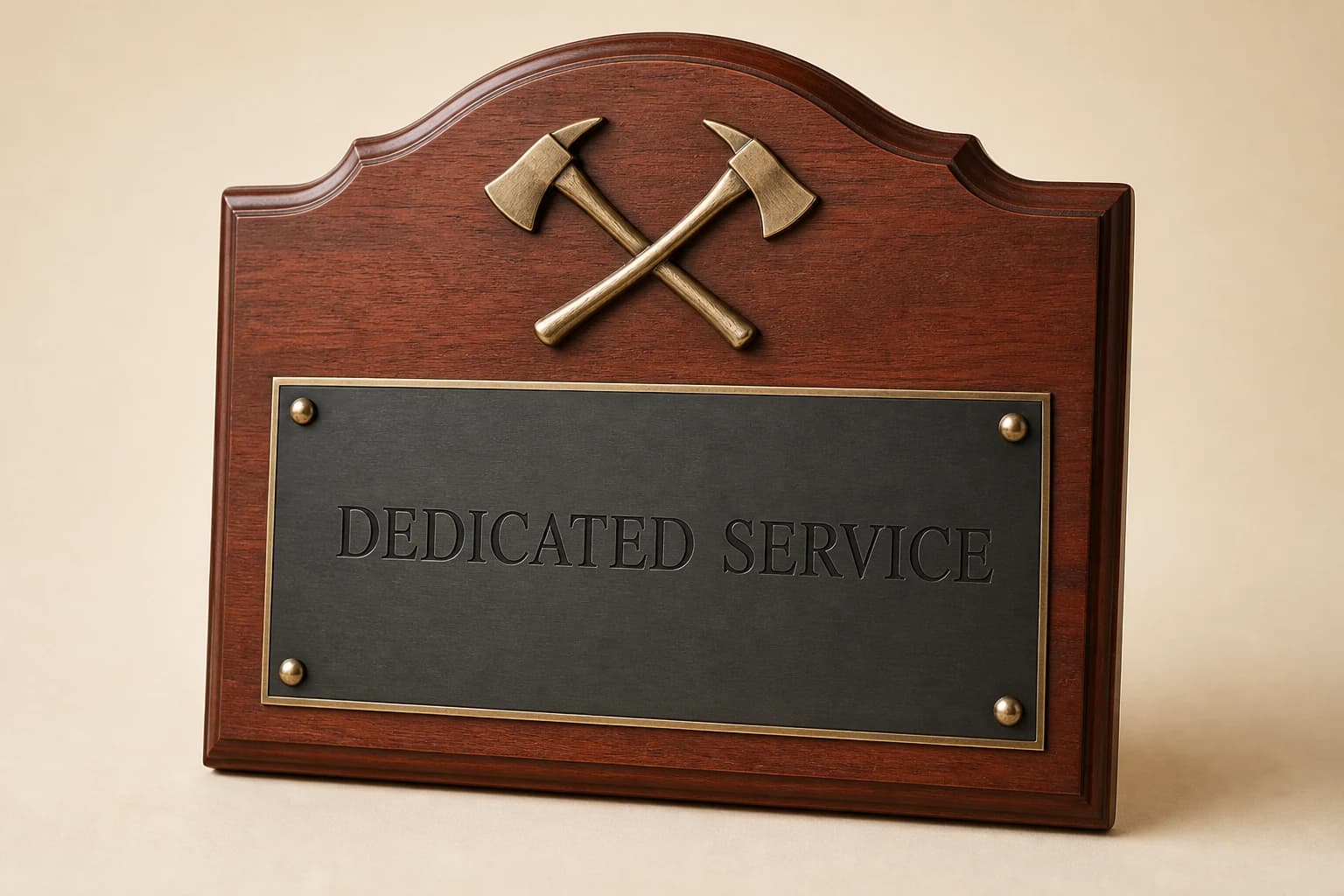
How do you ask what the complete presentation piece includes?
Request an itemized proposal identifying the plaque or base, decorative element, inscription area, any stand or attachment components and presentation packaging. If a product image includes an object merely for scale or inspiration, have the supplier state that explicitly. Compare complete scopes rather than assuming every visible part arrives in the box.
A simple axe motif may allow the name and retirement message to remain central, while a three-dimensional element may become the visual focus. Ask the recipient’s organizer which balance is intended. The distinction should be visible in the proof and the order description so a receiving volunteer can check the delivery without relying on memory of the original concept discussion.
Fire Awards lists both firefighter axes and axe-plaque products.
How do you measure any owner-supplied object separately?
If the display is intended to incorporate an existing personal object, provide its actual dimensions, orientation and condition reference. Record who owns it and whether the organizer permits any alteration. A photograph may explain appearance but cannot establish the complete interface.
Ask the proposed specialist whether the physical object is needed for review or whether dimensions and images can resolve the next decision. Do not send an irreplaceable item simply because a rendering suggests it belongs in the design. Agree on custody and return arrangements before any transfer. The final proposal should distinguish the purchased display from the owner’s property and make clear how the two are intended to work together under the reviewed construction.
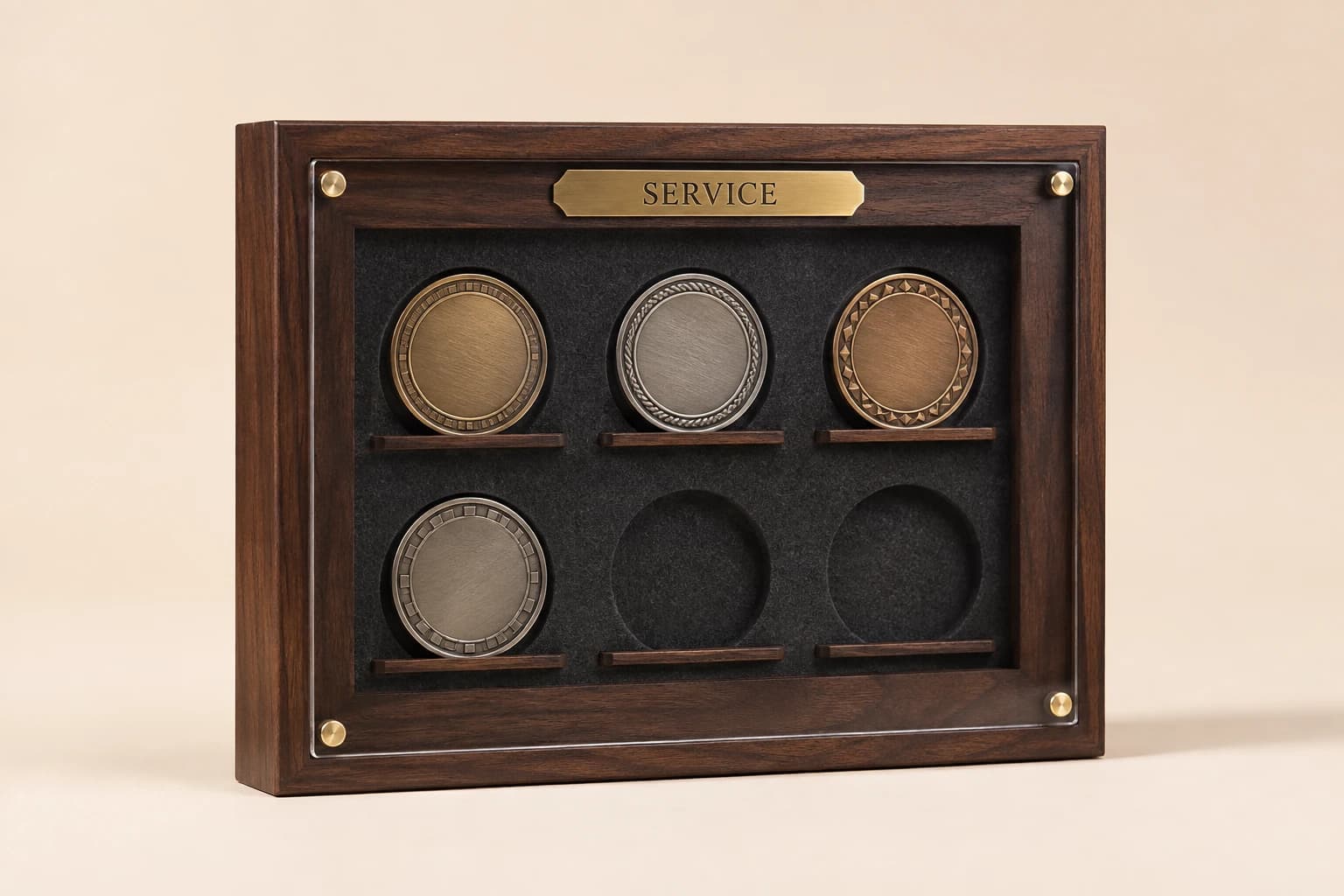
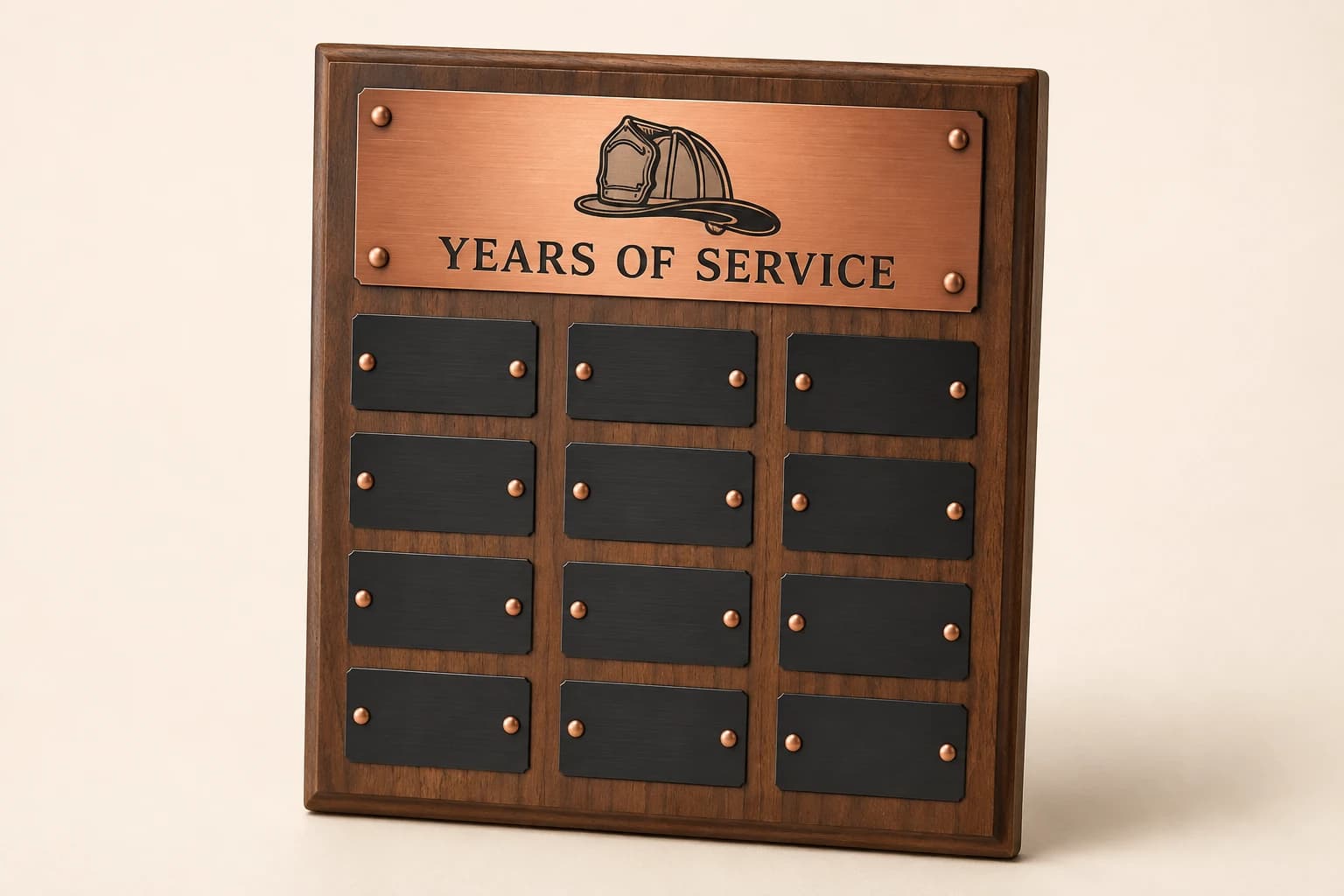
How do you keep the retirement wording readable beside the motif?
A dramatic decorative element can leave less space for the recipient’s name and dedication. Prepare the exact approved inscription early and review it in the actual proposed layout. Ask which line should be most prominent and whether a long service statement belongs on the piece or in a companion letter.
Do not shrink all text automatically to preserve a large motif chosen before the wording was available. If a department emblem is also requested, obtain the authorized artwork and review its relationship to the axe design. The gift should not imply an official distinction merely because the decoration resembles equipment or insignia. Keep the presenting group and occasion explicit in the message.
Total motif plaques and decorative displays
Load the fictional example, then replace its inputs with the reviewed details for your project.
Method: Multiply the entered units by pieces per unit, then add explicitly entered extra category pieces and spares. The result counts inputs without deciding recognition eligibility or product inclusions.
Build your plan
Set spares yourself. This calculates the quantities you enter; it does not assume a recommended buffer.
Use the article’s example files
Sample rows are illustrative and are not production instructions. Replace their assumptions, keep private records separately and complete the approval fields before using the sheet for a real order.
How do you plan how the recipient takes the object home?
Ask where the finished piece will be displayed and how it will leave the ceremony. A flat plaque and a multi-part display can require different packaging and handoff arrangements. Confirm the proposed complete packed object with the chosen carrier or transport provider if onward travel is planned.
Do not assume a decorative motif and an actual supplied object create the same shipping considerations. Assign a person to retain the intended packaging after photographs and to account for any separate stand or component. If the recipient’s available display space is unknown, compare a simpler motif-led concept before choosing a larger assembly. The presentation should remain practical after the event table is cleared.
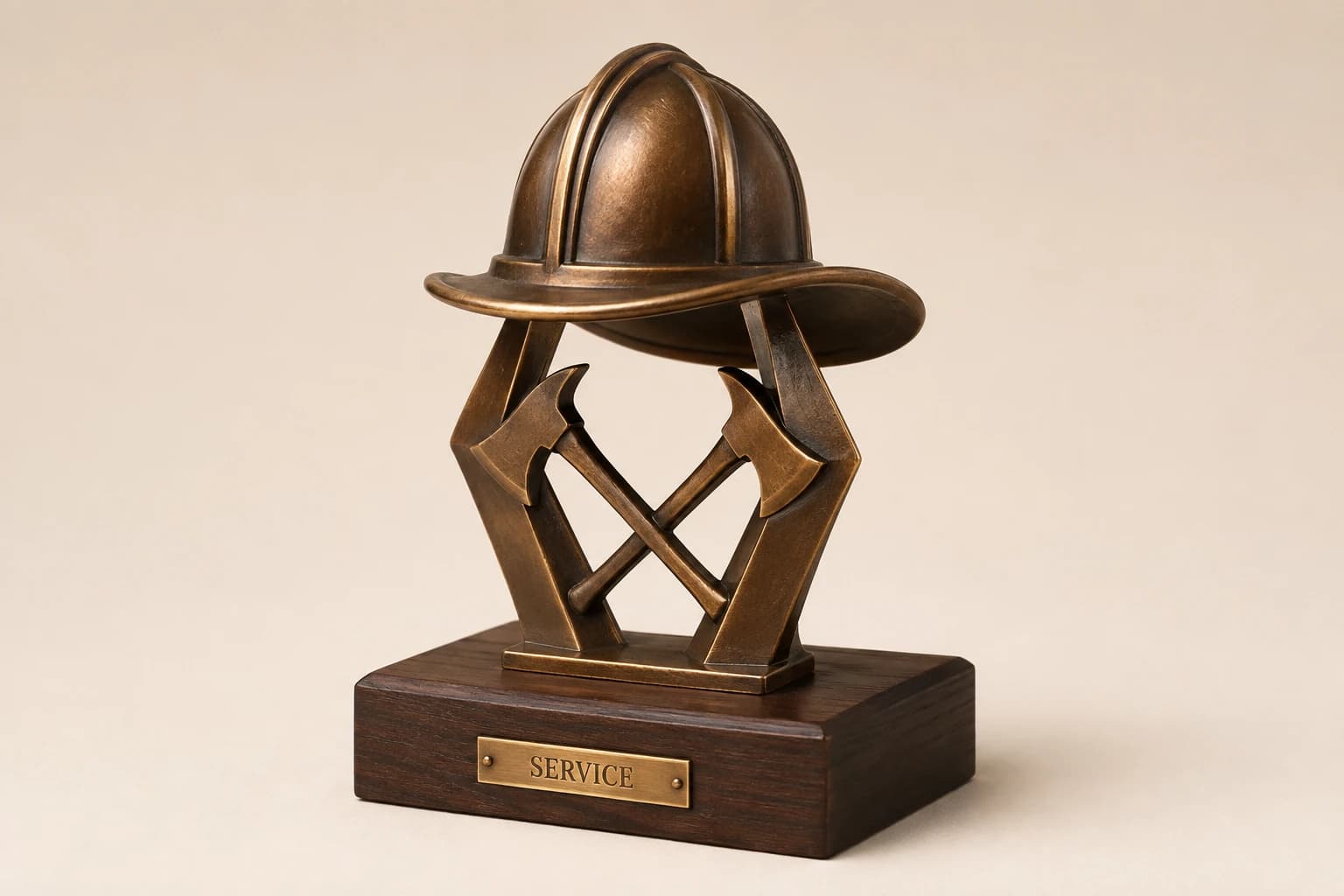
How do you keep the scope clear for copies and replacements?
Retain the approved component list, artwork and inscription with the final proof. A later request for another axe plaque should identify whether it means the motif-only version, the decorative-element version or the reviewed assembly for a supplied object. Those descriptions may share a visual theme while representing different orders.
If one component is damaged or missing, request a specific replacement against its reference rather than automatically ordering a complete new display. Ask whether compatibility needs renewed review. At receiving, compare the actual included parts with the proposal and confirm that any owner-supplied object is accounted for. This closes the distinction that began the buying process: the gift’s visual idea and its physical contents should match the approved scope.
How do you compare a silhouette and a dimensional concept?
Ask for two views using the same approved name and message: one with an axe silhouette and another with the proposed dimensional decorative element. Comparing identical wording makes the construction decision easier to assess. The second concept should identify its actual included parts rather than simply casting a more dramatic shadow in a rendering.
If the organizer cannot explain what additional purpose the dimensional element serves, return to the motif option and review whether it already meets the intended tribute. If the physical element is central to the recipient’s story, document that reason and obtain the complete display proposal. The comparison should resolve a meaningful design and scope choice rather than treat visual complexity as an automatic upgrade.
How does this illustrative planning example work?
For a fictional department program, eight motif plaques are planned, together with two separately approved complete decorative displays and zero spares. The organizer counts ten purchased pieces, while the component schedule explains the different constructions. Any owner-supplied objects are recorded outside that purchased-piece total.
The example does not imply that either design includes functional equipment. Enter eight motif plaques at one piece each and two additional complete decorative displays, with no spares. Eight plus two equals ten purchased pieces. The worksheet keeps the two construction groups separate even though they share one planning total. If a supplied object is proposed for either complete display, its ownership and measurements belong in the component brief rather than an assumed extra product count. The supplier’s final scope must explain what each of the ten purchased pieces actually includes.
Axe motif on a plaque or Complete object display: which fits the intended recognition?
An axe motif can connect the tribute to a chosen visual theme within a plaque layout. A complete object display adds a defined physical assembly and its own support and handoff questions. Compare included components and the recipient’s display setting before treating an illustrated axe as an item supplied with the order.
| Option | Axe motif on a plaque | Complete object display |
|---|---|---|
| Best reason to choose it | Choose this when the symbolic image supports the dedication without requiring a separately supplied physical object. | Choose this when the organizer deliberately wants a reviewed assembly incorporating an identified physical object. |
| Main review question | Is the motif artwork or an attached decorative element, and what does the written scope include? | Who supplies the object, and who approves its handling, interface and intended display arrangement? |
| What to specify | Specify the approved artwork, inscription hierarchy, complete plaque dimensions and included presentation components. | Specify the object inventory, measured dimensions, complete assembly scope and project-specific specialist responsibilities. |
| Later change | A later motif copy can preserve artwork while using a newly approved personal dedication. | A replacement object display needs the original component and supplied-item references, including any changed support requirements. |
What should the organizer confirm before ordering?
Define whether the axe is a visual motif or part of a complete decorative assembly. The quote, supplied-item list and recipient handoff should all describe the same choice. Confirm the actual components and display purpose before assuming an illustrated object is included or that the finished tribute has any equipment function.
What should the axe-themed gift quote include?
Ask Station House Awards to identify the motif or complete display construction, dimensions, personalization, supplied supports, packing and shipping, with the applicable minimum or range. List any owner-supplied object separately. A concept image does not establish that an axe, case or mounting arrangement is included, and the production schedule should follow the approved complete scope.
Is the axe shown in a concept image included?
Confirm the actual component list rather than assuming inclusion from the image. The design may use only a silhouette or may propose a separate decorative object. Ask which parts are supplied, which are retained or owner-provided and who reviews their interface before approving a rendering as the complete purchase.
Does a decorative presentation axe imply functional equipment?
Treat the tribute as the decorative object specified in the proposal. Do not infer operating suitability, equipment certification or functional use from its shape or ceremonial role. If a real owner-supplied object is involved, identify it separately and ask the responsible people to review the display and handling arrangement for that specific item.
How can the dedication stay readable beside the motif?
Place the exact approved retirement wording in the proposed face while showing the motif at its intended scale. Decide whether the name, occasion or image leads. If the layout is crowded, revise the decorative balance or optional wording through the reviewer rather than silently shortening the recipient’s name or an approved service statement.
What does the ten-piece example count?
The fictional department order contains eight motif plaques and two separately approved decorative displays, with zero spares. Those are ten purchased pieces with different construction rows. Owner-supplied items remain outside that total, and the arithmetic does not establish that either group includes functional equipment or identical supports and packaging.
Sources and scope
The sources below support the cited technical details. The ordering workflows are editorial recommendations. Your project specification, price and schedule are established in the written quote and approved proof.
- Fire Awards: Firefighter Axes and Axe Plaques · checked 2026-09-05
Which buying guide should you read next?
All buying guidesFor worldwide Station House Awards orders, choose a retirement gift for the individual’s take-home appreciation and a station board entry for a continuing institutional record. Their wording, ownership and later-update rules differ. If the ceremony includes both, count two physical pieces per approved pair and release separate proofs for their respective uses.
For worldwide Station House Awards orders, pack a multi-station ceremony around the actual presentation sequence while keeping station ownership visible. Give each piece a stable item code connecting proof, carton and recipient. Receiving checks, backstage staging and final handoff are different steps, especially when award categories mix people from several stations.