Station House Awards · buyer guide
Packing a multi-station recognition ceremony
For worldwide Station House Awards orders, pack a multi-station ceremony around the actual presentation sequence while keeping station ownership visible. Give each piece a stable item code connecting proof, carton and recipient. Receiving checks, backstage staging and final handoff are different steps, especially when award categories mix people from several stations.
Reviewed 2026-09-05 · AI-assisted editorial review. General buying guidance; illustrative scenarios are not customer case studies. Images are AI-generated concepts.
A multi-station order may contain similar plaques with different names, roles and destinations. Start with the ceremony’s presentation segments and identify which object is needed in each. Give every piece a stable item code that also appears on the proof and packing record. An alphabetical list can help with personalization review, but it may not match the event sequence. Ask the organizer whether presentations run by station, category or speaker and use that order for staging. The stage team should be able to find the next object without reading every inscription or remembering which product style belongs to which station. Keep the manufacturing batch order separate from the ceremony handoff order.
How do you distinguish station-owned pieces from personal gifts?
A retirement plaque may go home with a recipient, while a board entry or shared station tribute returns to a station custodian. Record the permanent owner for each object even when the same person accepts several on stage. A recipient holding a station plaque for photographs does not necessarily become its owner.
Use package labels that identify the item and intended destination without exposing private personnel notes. If a family copy is included, assign it a separate item code and receiving contact. The total order may be coordinated centrally, but the packing plan should preserve these differences so a helpful volunteer does not send an institutional piece home or leave a personal gift in station storage.


How do you group proofs without losing station-specific details?
Use a shared format where appropriate, but keep station names, recipient roles and service statements as approved fields for each piece. Ask one station representative to verify its entries and one event coordinator to reconcile the complete release list. A correction to a common heading may affect many pieces, while a recipient-name correction may affect only one.
Identify that scope in the revision record. Do not apply a late change to every station simply because the products share a template. The packing identifier should remain stable through proof revisions so the stage list and receiving sheet can continue to point to the same intended object.
How do you create a receiving check before boxes become stage props?
Assign a receiver to open the delivery, count the pieces and compare personalization with the final proofs before the ceremony setup. Record missing items, incorrect text or component questions by item code. If packaging must be retained for take-home gifts, keep it associated with the right object after the inspection.
Ask the supplier to confirm any requested grouping or labeling as part of the proposal; a single shipment does not automatically arrive in presentation order. The receiving allowance should reflect the actual order and event schedule. A delivery on the event day may leave little opportunity to resolve an exception, so make that limitation visible to the organizer when choosing the plan.
UPS advises placing a duplicate address label inside a package.
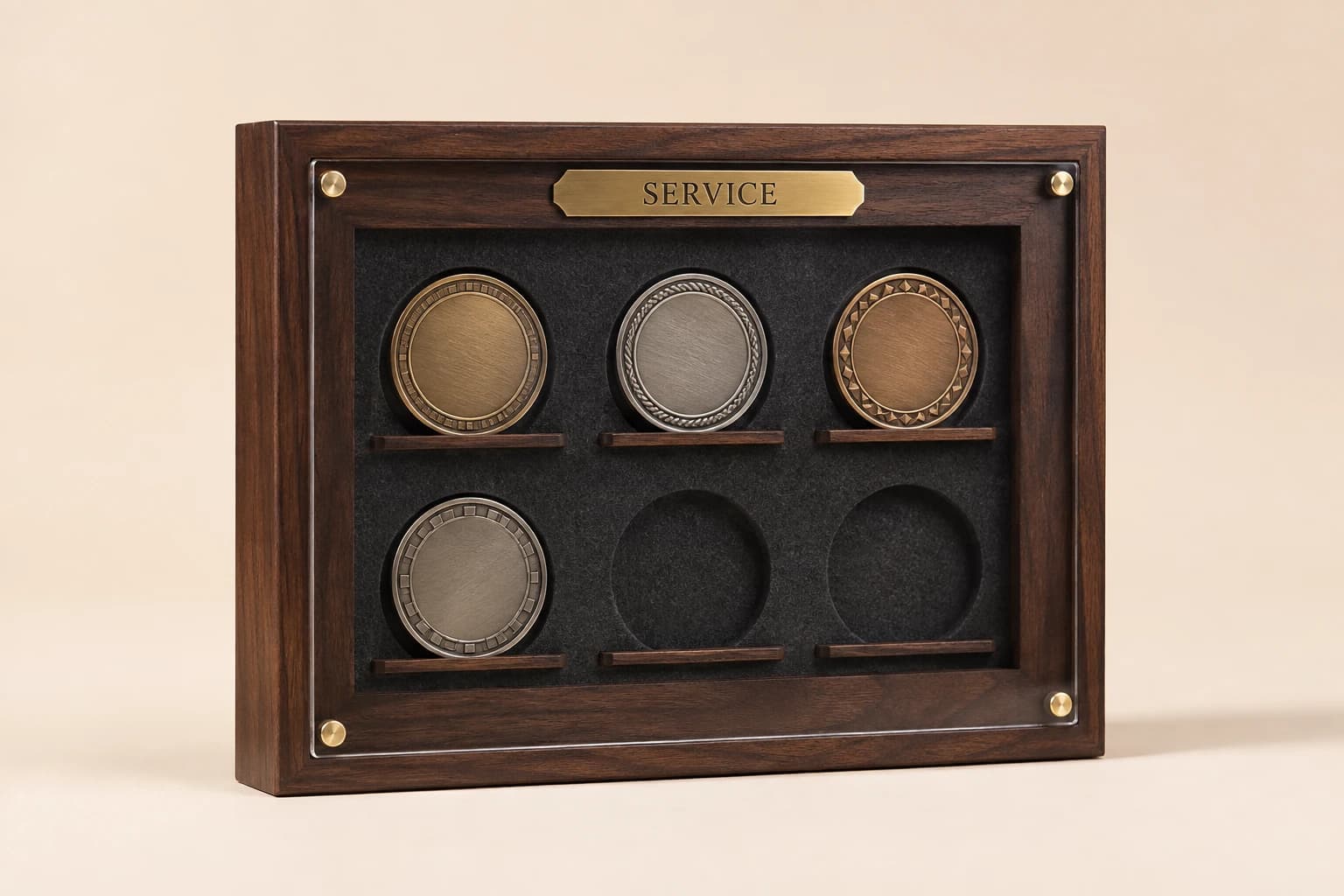
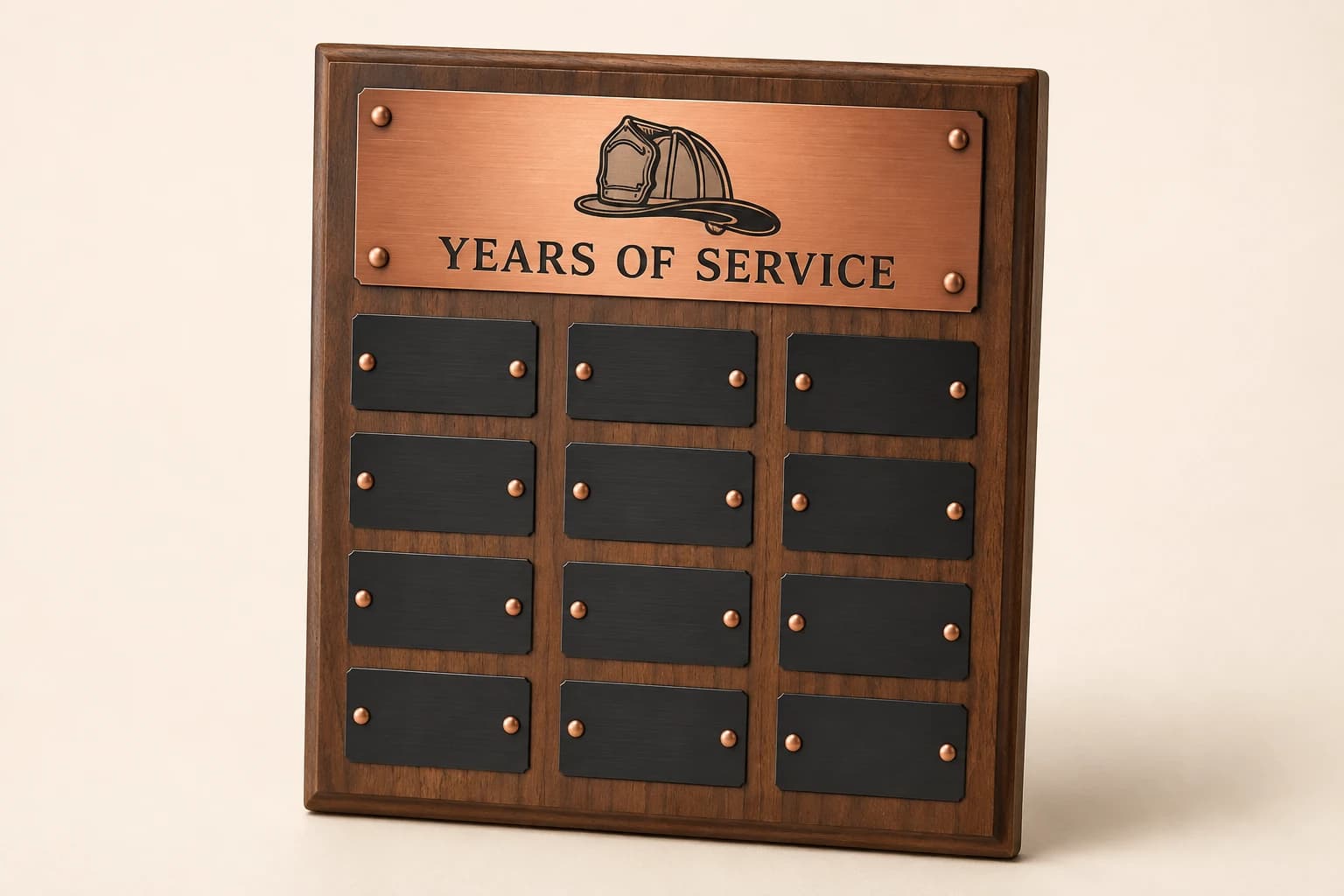
Sources: UPS: How to Pack Your Shipments
How do you plan absent recipients and station substitutions?
A recipient or station representative may be unable to attend. Decide who can accept the piece on their behalf and where it will be held afterward. Keep that event change separate from the approved inscription unless the intended recipient or presenting group actually changes.
If an object must be shipped later, confirm the final receiver and packing arrangement before forwarding it. A station office can be a practical holding point, but it should not become an indefinite destination without an owner responsible for follow-up. Record the next action on the item row so the post-event team knows which pieces were presented, which were accepted by a substitute and which still need a final handoff.
Schedule receiving before multi-station staging
Load the fictional example, then replace its inputs with the reviewed details for your project.
Method: Subtract the entered receiving, transit, production and proof allowances backwards from the required arrival date, excluding weekends. Holidays, available capacity and carrier commitments require separate confirmation.
Build your plan
Work backwards from arrival using your entered stage durations. Weekends are skipped; holidays and closures require extra allowance. Dates describe a plan, not reserved production capacity.
Use the article’s example files
Sample rows are illustrative and are not production instructions. Replace their assumptions, keep private records separately and complete the approval fields before using the sheet for a real order.
How do you rehearse the movement of the actual pieces?
During setup, walk through the ceremony sequence with the staged objects or clearly labeled stand-ins. Confirm which person carries each piece, where it is placed for photographs and who returns it to protective packing. This is especially useful when several plaques look similar from the back.
Keep any separate bases or accessories with their assigned item and confirm that the organizer knows what is included. Do not rely on a product image to explain a multi-part assembly at the last minute. If the order includes an unusual supplied object or construction, follow the project-specific handling proposal from the responsible people. The rehearsal should expose practical handoff questions while there is still time to resolve them.

How do you reconcile the final distribution by item code?
After the ceremony, compare the packing list with the actual handoffs. Record personal gifts delivered to recipients, station-owned pieces returned to custodians and unresolved items awaiting collection or shipment. A stage presentation is not complete distribution if the object was left behind after photographs.
Assign one coordinator to close the remaining rows and keep the final proof available for any correction or replacement. If another station later requests a similar piece, start from its own approved recipient and wording rather than copying a completed row unchanged. The event record should remain a clear account of which physical objects reached their intended owners, not merely a list of names that appeared in the ceremony program.
How do you use a backstage code that survives repacking?
A short item code can stay with an object even when its outer shipping box is removed. Ask the ceremony team how that code will remain associated with the correct protective package and stage row without placing an inappropriate label on the finished face.
Keep the method within the approved handling arrangement. When several recipients have similar names or identical plaque shapes, the code provides a second check beyond appearance. After photographs, match the object back to its intended package and custodian using the same record. This helps prevent a correct initial delivery from becoming an incorrect final handoff through a simple backstage mix-up.
How does this illustrative receiving schedule work?
For a fictional shared ceremony, three stations submit recognition pieces that will be presented by award category rather than by station. The coordinator keeps a station column for ownership and a separate segment number for staging. All pieces must reach the host receiver before the November 20, 2026 event handoff.
The illustrative backward schedule uses entered allowances only; the organizer must replace them with the confirmed production and shipping plan. For this fictional multi-station staging plan, require arrival on Friday, November 20, 2026. Enter two weekday receiving days, three transit days, six production days and two proof-review days. The backward arithmetic places receiving on November 18, dispatch on November 13, production start on November 5 and proof-review start on November 3. These entered allowances illustrate the sequence only. The tool skips weekends and does not remove holidays or confirm available capacity, so the organizer must check actual closures and service commitments before adopting the dates.
Pack by station or Pack by presentation segment: which fits the intended recognition?
Packing by station keeps institutional ownership groups together, while packing by presentation segment puts the next ceremony pieces within reach. Compare the speaking order with the receiving and final-custody plan before choosing. Stable item codes can connect both views so repacking for the stage does not erase the original station mapping.
| Option | Pack by station | Pack by presentation segment |
|---|---|---|
| Best reason to choose it | Choose this when station representatives manage their own ceremony segments and final distribution. | Choose this when one central stage team presents mixed-station categories in a fixed sequence. |
| Main review question | Does each station batch contain the correct personal and institutional pieces with clear owners? | Can the stage team identify every next object and return it to the correct owner’s package? |
| What to specify | Specify station group, item codes, representative, presentation order and post-event custodian. | Specify segment order, item codes, presenter, final destination and absent-recipient handling. |
| Later change | A station-owned piece remains assigned to its custodian even if backstage repacking changes its carton group. | A segment change updates stage order while preserving each item’s station, recipient and final handoff record. |
What should the organizer confirm before ordering?
Match the packing arrangement to the ceremony’s actual sequence while retaining station and owner references. Receiving, staging and distribution are separate status checks. A stable item code should survive repacking, identify an absent recipient’s gift and let the coordinator reconcile the final handoff without relying only on the carton total.
When should the ceremony’s packing schedule be confirmed?
Give Station House Awards the piece schedule, receiving deadline and requested grouping before the final production and shipping plan is adopted. Ask the quote to identify packing scope and any associated charges, plus its applicable minimum or range. Confirm actual stage order with the organizer; the illustrative November timeline does not reserve capacity or promise transit performance.
Is packing by station always easiest?
Choose it when the ceremony and handoff actually follow station groups. If awards are presented by category across several stations, presentation-segment packing may be more useful backstage. Preserve the station field either way so the receiving person and final custodian can still identify ownership after pieces are rearranged for the stage.
What should an item code connect?
Use the same stable reference on the approved proof, packing row, presentation segment and final handoff record. The code should identify the object even when its outer carton changes. Keep private recipient or delivery details in the appropriate record rather than placing unnecessary personal information on public ceremony labels.
What happens when a recipient is absent?
Assign the piece to a named later handoff owner and record it as pending distribution. Do not substitute another recipient or change the inscription to use the object during the ceremony. Retain the correct item code and protective packing so the intended gift can reach its owner without being confused with station-held pieces.
Does the final carton count prove complete distribution?
No. Reconcile objects received, staged, presented, held for correction and assigned to later handoffs separately. A correct incoming total can still leave a gift backstage or with the wrong station. Close the ceremony record by item code and intended owner, while keeping unresolved exceptions visible until the responsible coordinator confirms their disposition.
Sources and scope
The sources below support the cited technical details. The ordering workflows are editorial recommendations. Your project specification, price and schedule are established in the written quote and approved proof.
- UPS: How to Pack Your Shipments · checked 2026-09-05
Which buying guide should you read next?
All buying guidesFor worldwide Station House Awards orders, distinguish an axe motif from a complete decorative display before approving the gift. A silhouette on a plaque and a dimensional presentation object have different component and handling questions. State what the quote should supply, what the owner provides and how the recipient will display the finished piece.
For worldwide Station House Awards orders, choose a retirement gift for the individual’s take-home appreciation and a station board entry for a continuing institutional record. Their wording, ownership and later-update rules differ. If the ceremony includes both, count two physical pieces per approved pair and release separate proofs for their respective uses.