Station House Awards · buyer guide
Dimensional helmet trophies versus flat helmet graphics
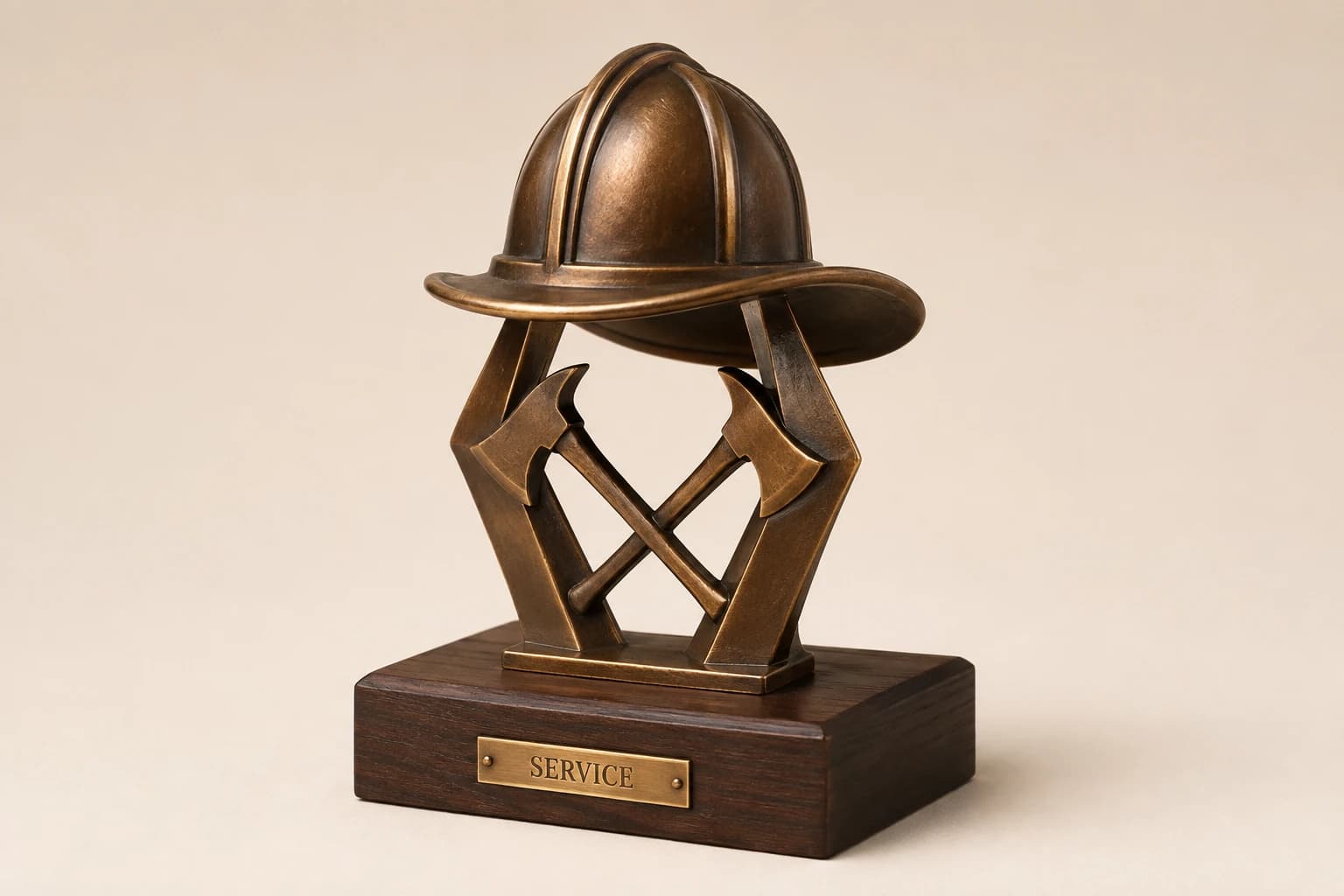
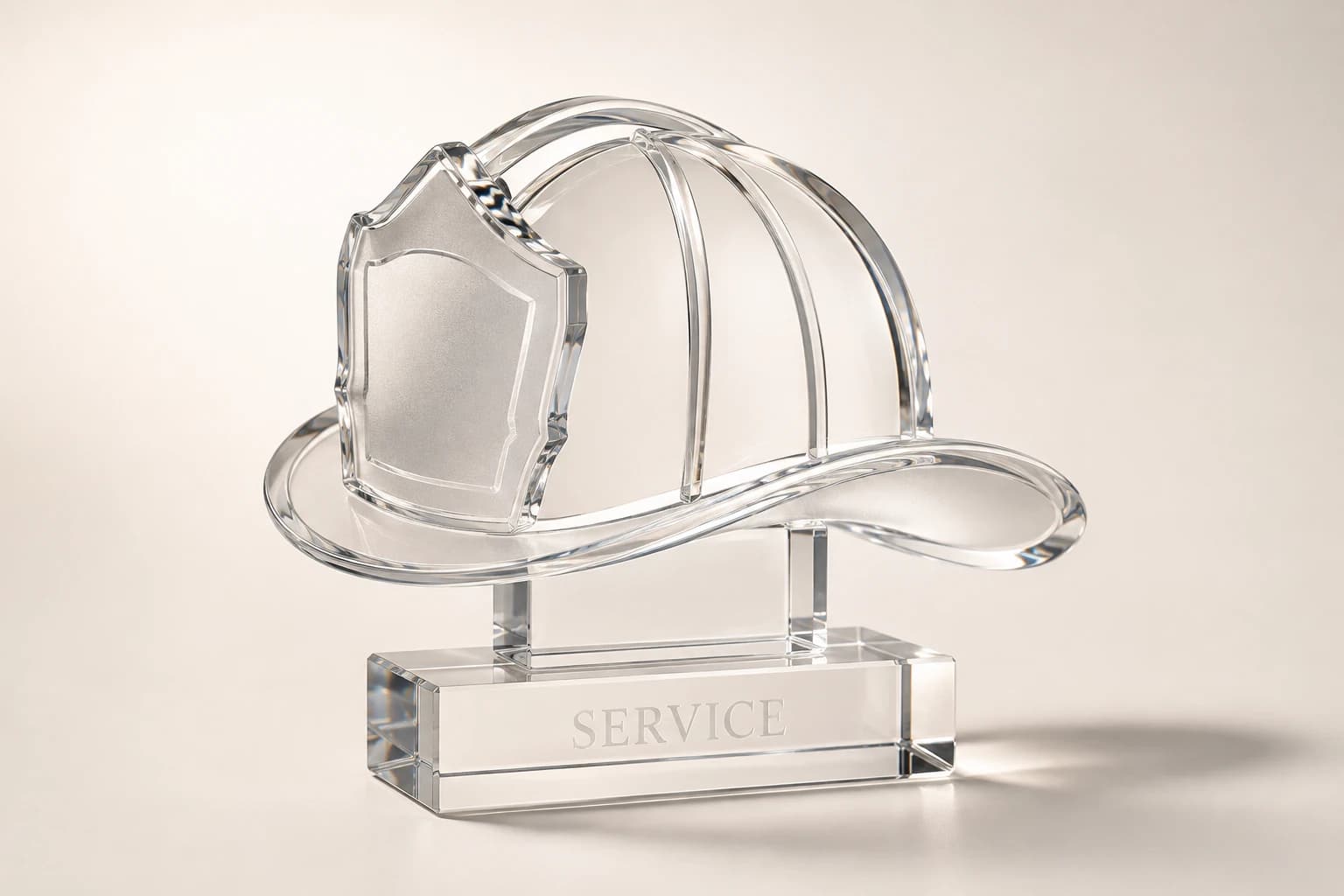
For worldwide Station House Awards orders, choose a dimensional helmet trophy when the physical helmet form is central to the tribute, and a flat helmet graphic when the image should support a plaque or acrylic face. Compare the complete object, visible detail and finish evidence. A front rendering does not approve the sides, back or base.
Reviewed 2026-09-05 · AI-assisted editorial review. General buying guidance; illustrative scenarios are not customer case studies. Images are AI-generated concepts.
Decide whether the recipient should receive a physical helmet-shaped element or an award carrying a helmet illustration. Those can express a similar theme while producing very different objects. The 3D Helmet or Axe Element Trophy and Hard-Hat Style Acrylic Award are useful catalog directions, but the proposed construction needs to identify what is actually supplied. Do not assume a helmet-shaped element is operational equipment or an exact model of a real helmet. This guide concerns decorative recognition. Ask the organizer which visual features matter and where the recipient intends to display the gift. The choice should follow that purpose before the design becomes a discussion of colors and engraving alone.
Which views should a dimensional concept include?
Request enough views to understand the entire decorative element, including any side or rear surface visible in the intended display. A convincing front render can conceal an unfinished-looking back, an unexpected support or a motif that stops at the side.
Ask how the proposed helmet relates to the base and where any separate inscription component sits. If the buyer wants a recognizable reference, identify the features that should carry around the form. Do not infer hidden detail from a single photograph. The release should describe the complete object so the recipient does not discover that a detail they considered central existed only in the front-view concept.
What should be asked about a printed element’s finish?
Ask which actual production and finishing process the supplier proposes for the decorative element, and request evidence of the resulting surface where appearance is a buying priority. A digital model does not contain the physical surface qualities of a manufactured object.
Layer visibility, texture and post-processing can depend on the actual process, so keep them in the proposal rather than promising that every printed element will look the same. A material sample can explain a surface, while a representative finished part may better address a small curved feature. The buyer should specify the desired visual result and let the supplier explain how the quoted construction addresses it.
Formlabs notes that SLS part orientation can affect visible layer lines.
Sources: Formlabs: Model Orientation Best Practices for SLS Printing
How should a flat helmet graphic be reviewed?
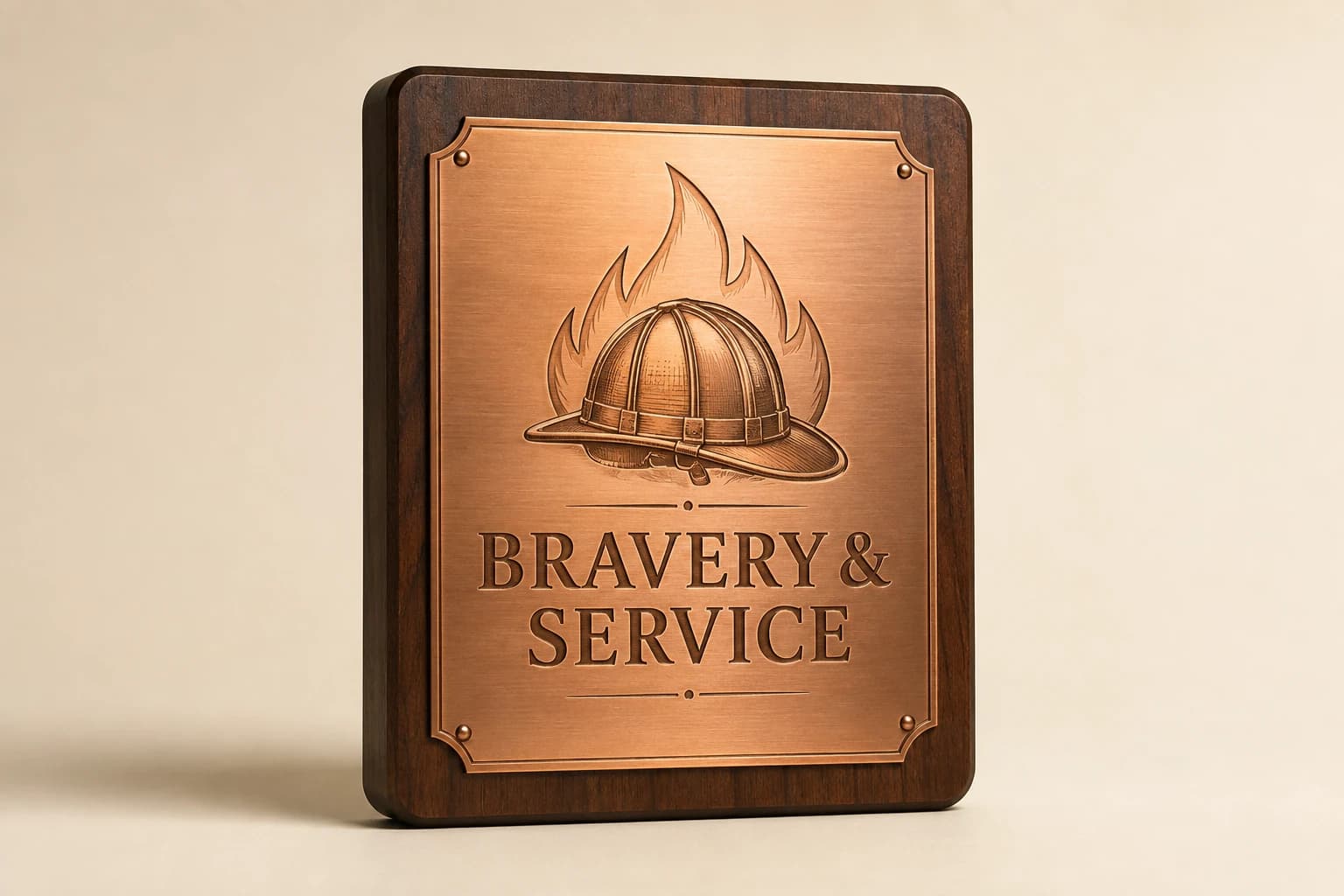
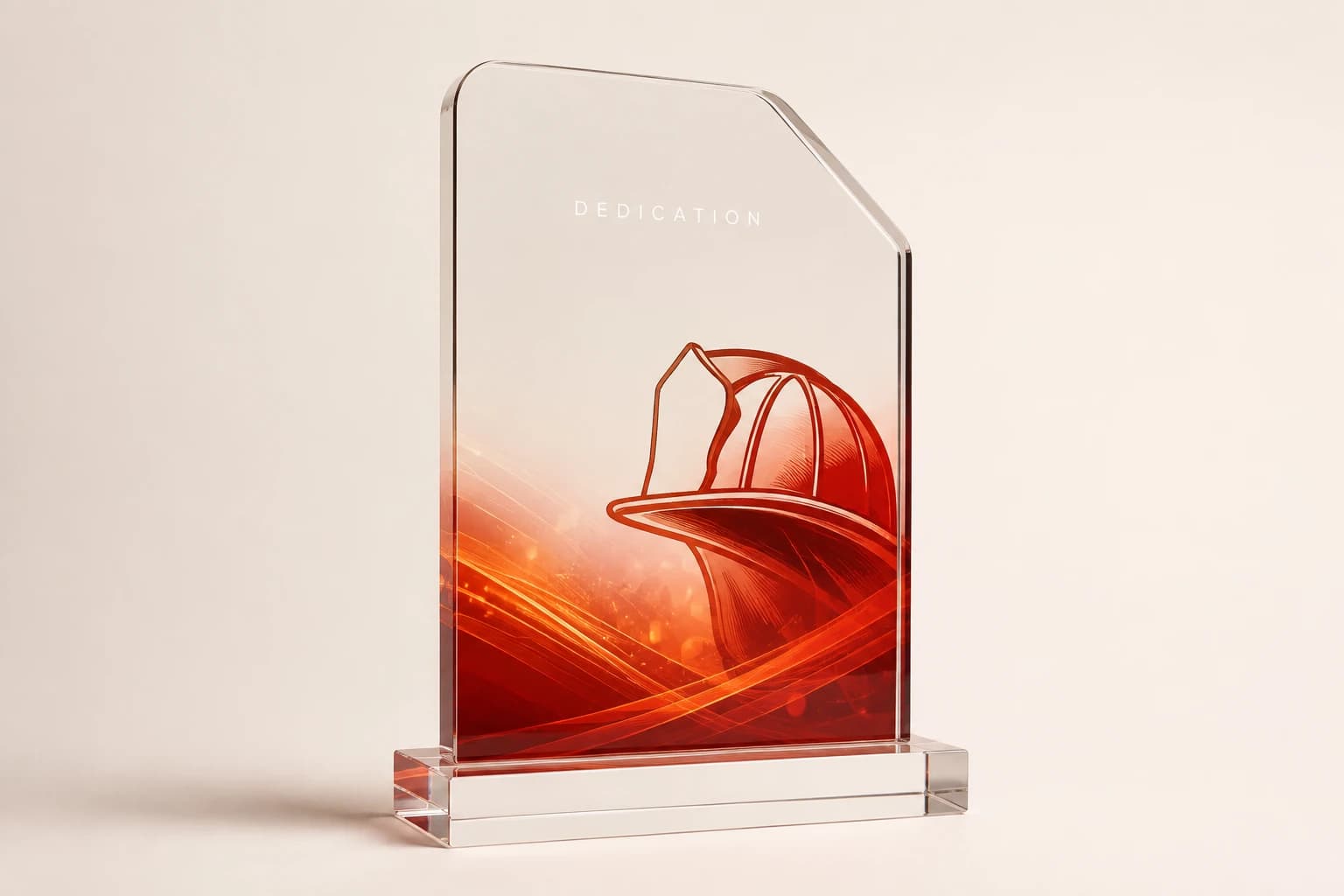
Treat the flat graphic as a designed interpretation rather than an inferior substitute for a dimensional object. It can let the helmet theme support a larger dedication or a different acrylic shape. Ask whether the image is engraved, printed or otherwise applied, and review its relationship to the face background.
A front-view helmet can be simplified deliberately when the organizer approves the essential features. Keep those changes visible in the artwork proof. If the requested meaning depends on a side feature that the flat view omits, choose another view or layout. The objective is a complete approved image within the selected award, not a claim that one format reproduces every aspect of a physical helmet.

What does the complete display envelope include?
Compare the overall width, depth and height of the finished trophy, including the base and any projecting helmet detail. A base footprint alone can understate how far the object extends. Ask the owner which shelf or display area is available and keep the dimensions in a consistent unit.
The proposed element and base should be reviewed together for the actual construction. Do not add a generic clearance or assume this guide establishes stability. A flat award may occupy a different envelope even when its front silhouette is similar. The useful buying comparison shows what each complete object occupies, leaving project-specific support or placement questions to the responsible people.
How should the quote describe the helmet treatment?
Request the dimensional element or flat graphic, material, finish, base, inscription component and shipping as explicit scope. Ask what design views, representative samples and revisions are included, and whether a particular reference requires additional interpretation work. No Station House Awards price range or minimum for this configuration is established here; request those figures for the actual proposed construction.
A rendered helmet on a generic base is not yet a complete supply description. Compare the finished decorative object with the complete flat award, including their respective artwork and sample needs. Keep any owner-supplied reference object separate and avoid sending something valuable merely because the production question has not been explained.
Use the article’s example files
Use the worked comparison as a starting point. Replace its hypothetical dimensions and choices with the supplier’s actual proposal and the owner’s approved requirements.
What should a later copy preserve?
Retain the approved views, surface reference, dimensions and complete component list for the selected design. A later inscription change should not quietly alter the helmet’s finish or substitute a different base. If the supplier proposes a different process or element for a copy, review the change against the original purpose rather than relying on a matching product nickname.
A flat graphic also needs its approved interpretation preserved, including the view and simplified features. The final reference should make clear whether the gift is a dimensional decorative object or an image-led award. That prevents a future organizer from ordering the wrong construction from an attractive but incomplete photograph.
How does the illustrative product-selection example work?
In a fictional recipient’s display brief, the available shelf depth is 100 millimeters. Three proposed decorative objects have complete depths of 120 millimeters for a dimensional trophy, 70 for a shallow relief and 25 for a flat award. These are hypothetical proposal dimensions, including their supports, rather than measurements of catalog products.
The dimensional option exceeds the stated shelf depth by 20 millimeters. The relief leaves 30 millimeters within that depth, and the flat award leaves 75. This arithmetic identifies the dimensional concept as needing a different location or revised proposal. It does not establish stability or prescribe a minimum clearance for the other two. The recipient still chooses the visual treatment, and the supplier still confirms the actual complete dimensions and support. The worksheet keeps the depth question alongside the required views and finish evidence so a space-compatible option is not approved before its decorative details are understood.
Optional calculation: Compare the proposed material descriptions
Which proposed construction fits the intended use?
A dimensional helmet element emphasizes a physical form that needs several views and a finish reference. A shallow relief can offer another depth treatment when specifically proposed. A flat graphic keeps the theme within the award face. Compare complete dimensions and approved features before treating a similar front silhouette as the same product.
| Option | Dimensional helmet element | Shallow relief interpretation | Flat helmet graphic |
|---|---|---|---|
| Best reason to choose it | Choose this when the full decorative helmet form is central to the intended tribute. | Choose this when the proposal intentionally gives the helmet some depth within a more compact arrangement. | Choose this when the helmet image should support the dedication on a plaque or acrylic face. |
| What the buyer must review | Review front, side and rear views, finish evidence and the complete base-and-element envelope. | Review the actual depth and which features remain dimensional rather than assuming a full model. | Review the selected view, approved simplification and decoration against the actual face background. |
| What the quote should identify | Identify the element material, production and finish scope, base and supplied inscription component. | Identify the relief construction, background relationship and complete support arrangement. | Identify the image treatment, award form and complete finished layout. |
What should you confirm before requesting this product?
Confirm whether the helmet is a dimensional object, a shallow relief or a flat graphic, then request the evidence appropriate to that choice. Several views can explain a form that a front rendering hides. The quote should identify the complete decorative assembly and finish without implying operational equipment or unverified display suitability.
What affects the cost of a dimensional helmet trophy?
Ask Station House Awards to quote the actual element, material, finishing, base, inscription and shipping, with the applicable minimum or range. Request the included design views and any representative sample scope. A flat graphic and a dimensional element involve different work, so compare complete finished proposals rather than assuming the same helmet theme creates equivalent costs.
Does a decorative helmet trophy represent usable equipment?
No operational use should be inferred from the decorative shape. The order should describe the recognition object actually supplied. If a real reference object is involved, identify it separately and resolve any handling or display question with the responsible organizer and appropriate specialist rather than treating the award concept as equipment approval.
Why is a front rendering insufficient for a dimensional element?
It can leave side features, rear surfaces, supports and the relationship to the base unclear. Ask for the views that matter in the recipient’s display setting and retain them with the approved design. A recognizable front silhouette does not establish that the whole object has the detail or finish the buyer expects.
Can the shelf-depth example choose the final product?
It can eliminate or hold a proposal that exceeds the owner’s stated depth, but it does not settle appearance, support or stability. The hypothetical 120-millimeter object exceeds the 100-millimeter shelf condition by 20 millimeters. The remaining options still need their actual dimensions, finish and decorative treatment reviewed.
What should be checked if a later copy uses another process?
Compare the proposed surface, detail, dimensions and component arrangement with the approved reference. A matching digital shape does not guarantee an identical physical finish. Ask the supplier to identify the change explicitly and obtain the organizer’s acceptance before treating the revised process or base as the same decorative product.
Sources and scope
The sources below support the cited technical details. The ordering workflows are editorial recommendations. Your project specification, price and schedule are established in the written quote and approved proof.
- Formlabs: Model Orientation Best Practices for SLS Printing · checked 2026-09-05
Which buying guide should you read next?
All buying guidesFor worldwide Station House Awards orders, distinguish an axe motif from a complete decorative display before approving the gift. A silhouette on a plaque and a dimensional presentation object have different component and handling questions. State what the quote should supply, what the owner provides and how the recipient will display the finished piece.
Confirm the department, recipient title, service period and occasion with the designated department contact. Choose between a personal retirement piece and a shared station display, then specify approved artwork, item mounting and inscription space. Keep ceremonial design separate from claims about operational equipment or qualifications.